 December
04
December
04
Albany and Hyden: Whaling, War, Wheat, and Wave Rock
December 1-4
Albany (pronounced ‘Al’, not ‘All’) is the oldest settled town in Western Australia (1826) and is built around King George Sound, a natural harbour with spectacular vistas that easily rival those of Sydney. It was superseded as the main WA port by Fremantle in 1897 as the direction of the prevailing winds made getting your sailing ship in and out of the port tricky. Despite this limitation it has thrived as a deep water port initially serving the Goldfields, and subsequently through agriculture, timber, and whaling. Today it survives as a tourist destination and the gateway from which to explore the south west of WA. Through its clever preservation of its heritage it gives an enthralling insight into many aspects of Australian history.
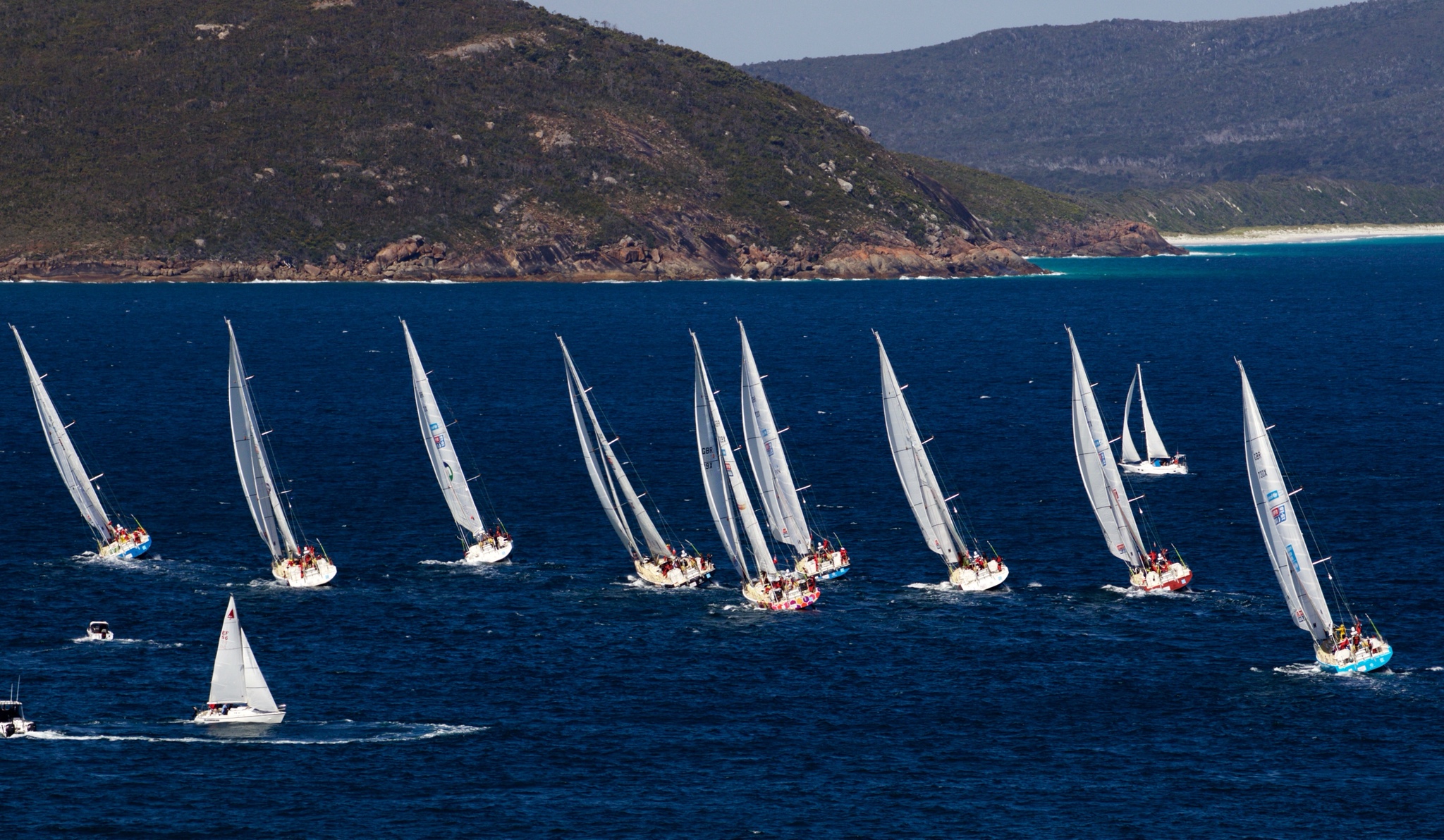
Round the world clipper race, leaving Albany Harbour
We camped in the Big 4 at Middleton Beach… another one of those really well equiped campsites, but with the Maui-Britz vans and their horrendously noisy sliding doors – grrrrrrate, BANG in the night as the occupants escape for a call of nature. It backed onto a beach that was supposed to be an excellent beginners surfing beach, but during our stay waves seemed to vanish and be replaced by howling cold Southern Ocean winds, and heavy showers. Perhaps I am being too down (still dreaming of our remote tropical experiences) as we really enjoyed our Albany stay and there was so much to do.
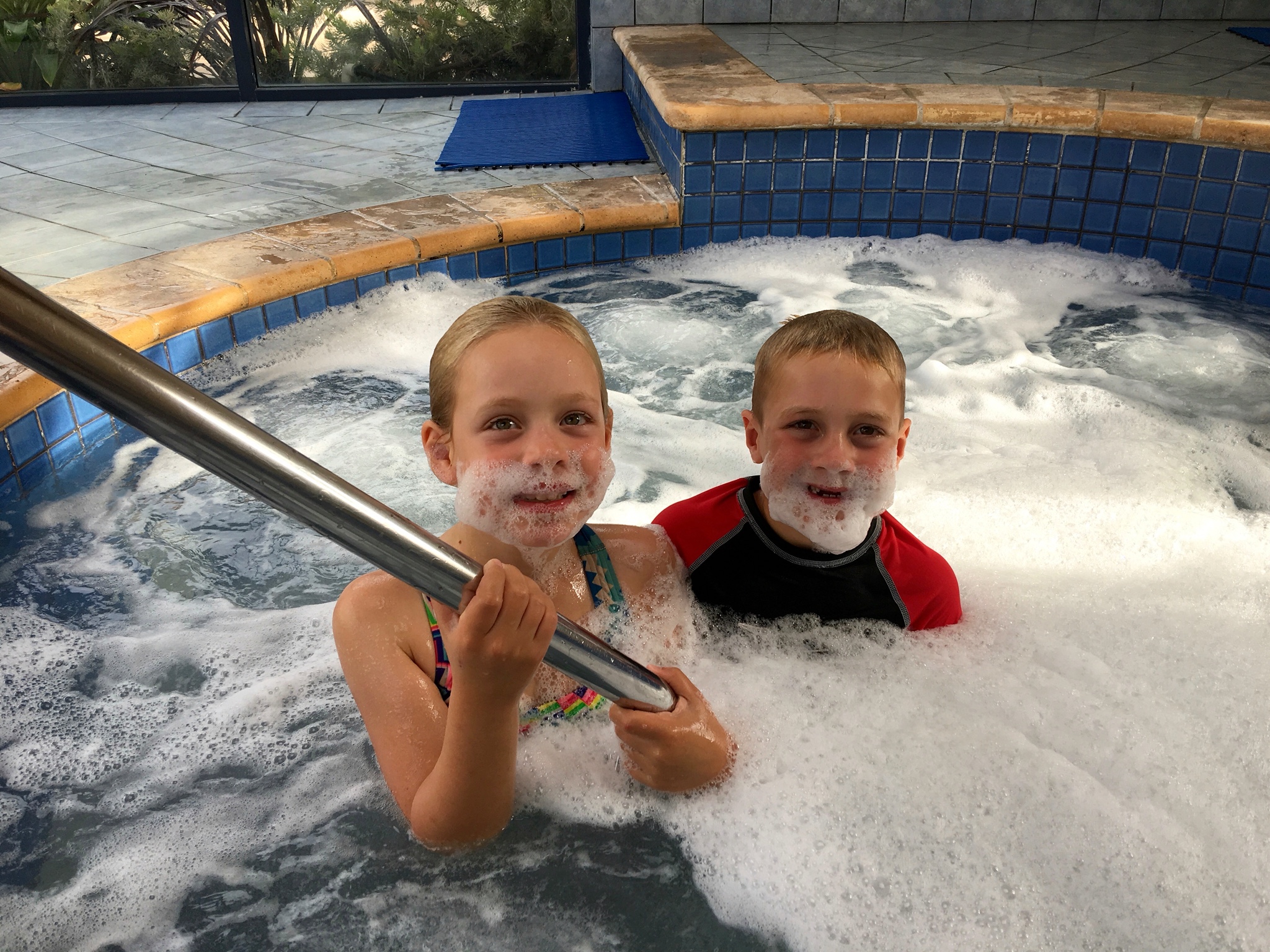
Mr and Mrs Claus
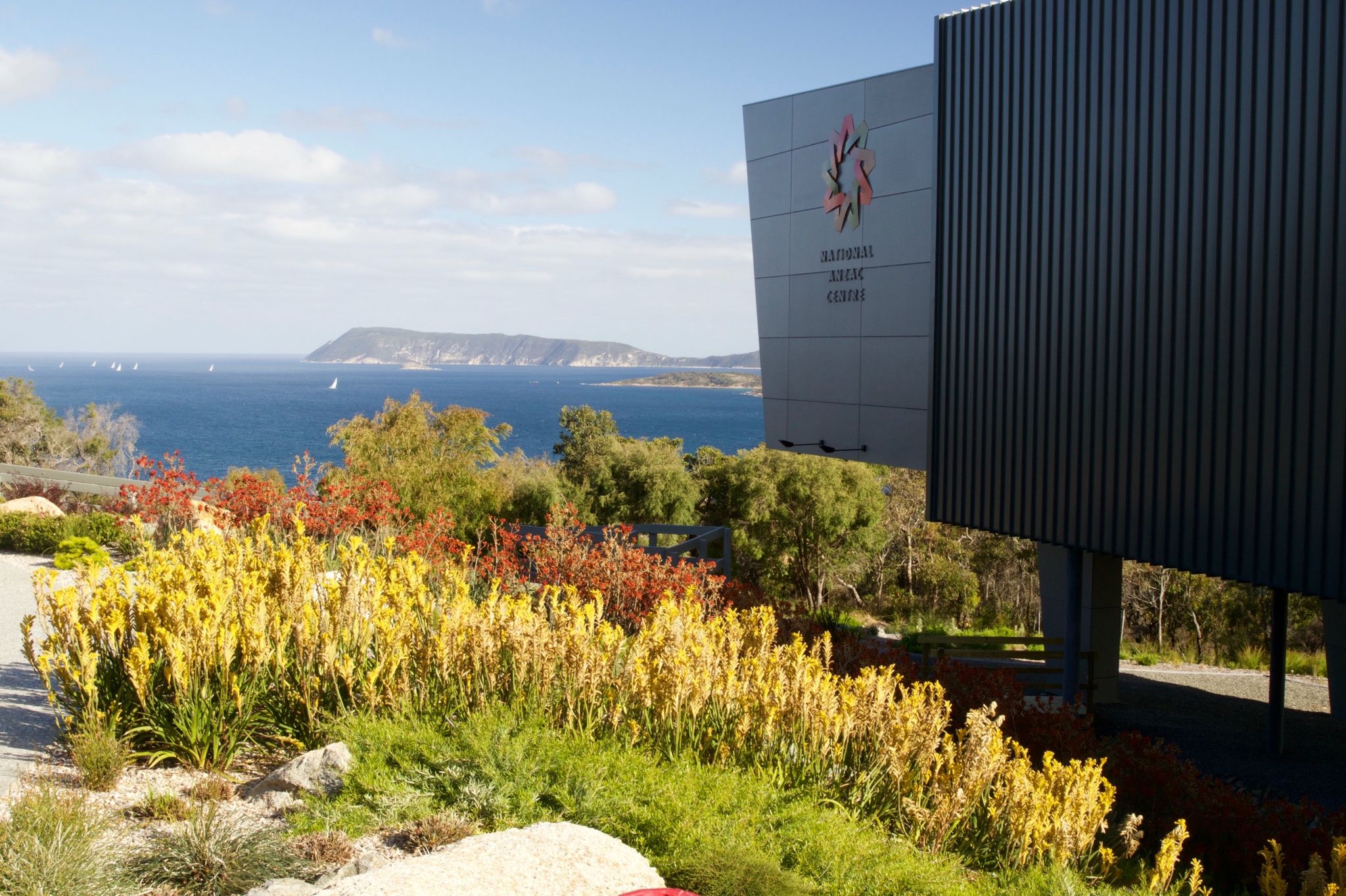
National ANZAC Centre overlooking King George Sound
Over 40,000 ANZAC soldiers last view of Australia was the spectacular Albany Harbour as they went off to fight in WWI from one of the two troopship convoys. A little over a third of them never returned and there are a number of memorials around the town to commemorate their sacrifice. The most notable is the National ANZAC Centre perched overlooking the bays which the convoys assembled in and departed from. The museum is incredibly beautiful with massive windows cleverly positioned to give vistas of the bay and allow moody lighting to fall over the well presented interactive displays and striking memorial of all the soldiers names. There is an interesting system where you are given a picture card to represent a real solider that you place on readers at various parts of the museum. This gives you information on their life, from prewar to what happened after the war (it they made it back). It was a really engaging experience.
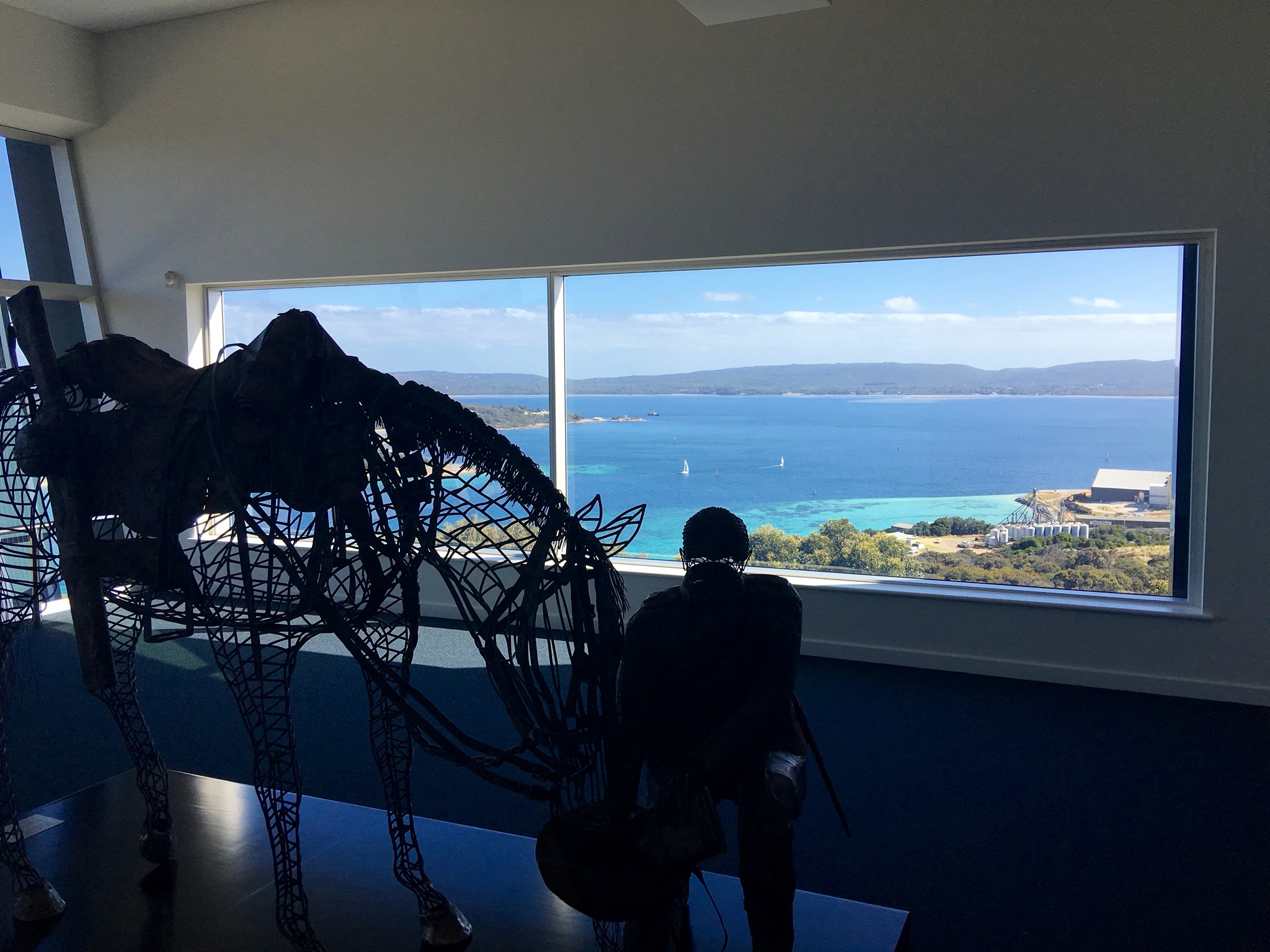
Views over the bay's from the ANZAC Centre
There are memorials on the prominent lookouts around town, including on Mount Clarence, where the Desert Mounted Corps are remembered. Gun emplacements are found in the museum grounds and along the headland with a range of guns from the ages that are remarkably accessible… fun for the kids, although I am not sure that they got their significance!
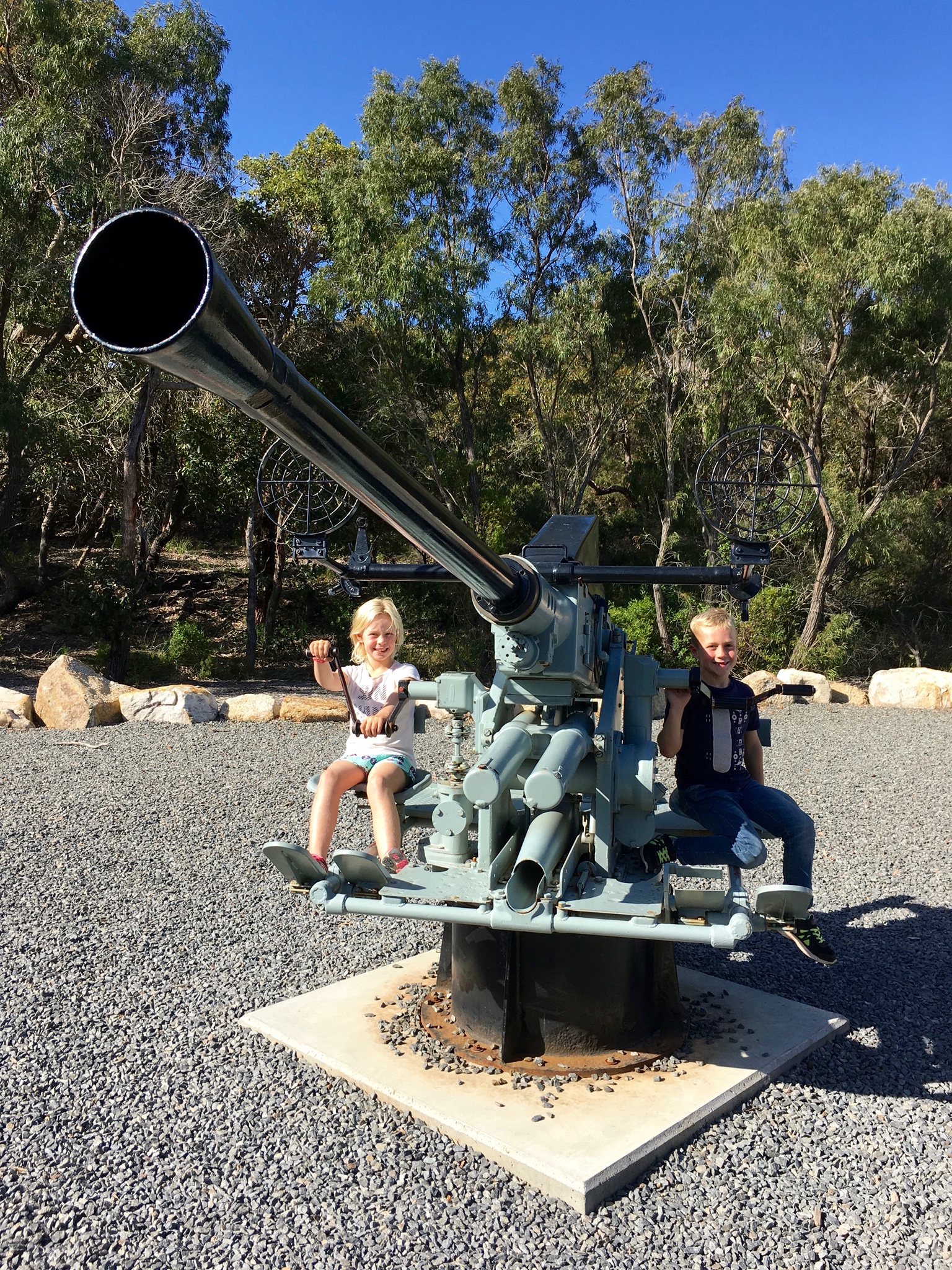
The handles made it go around and up and down... Hours of fun?!
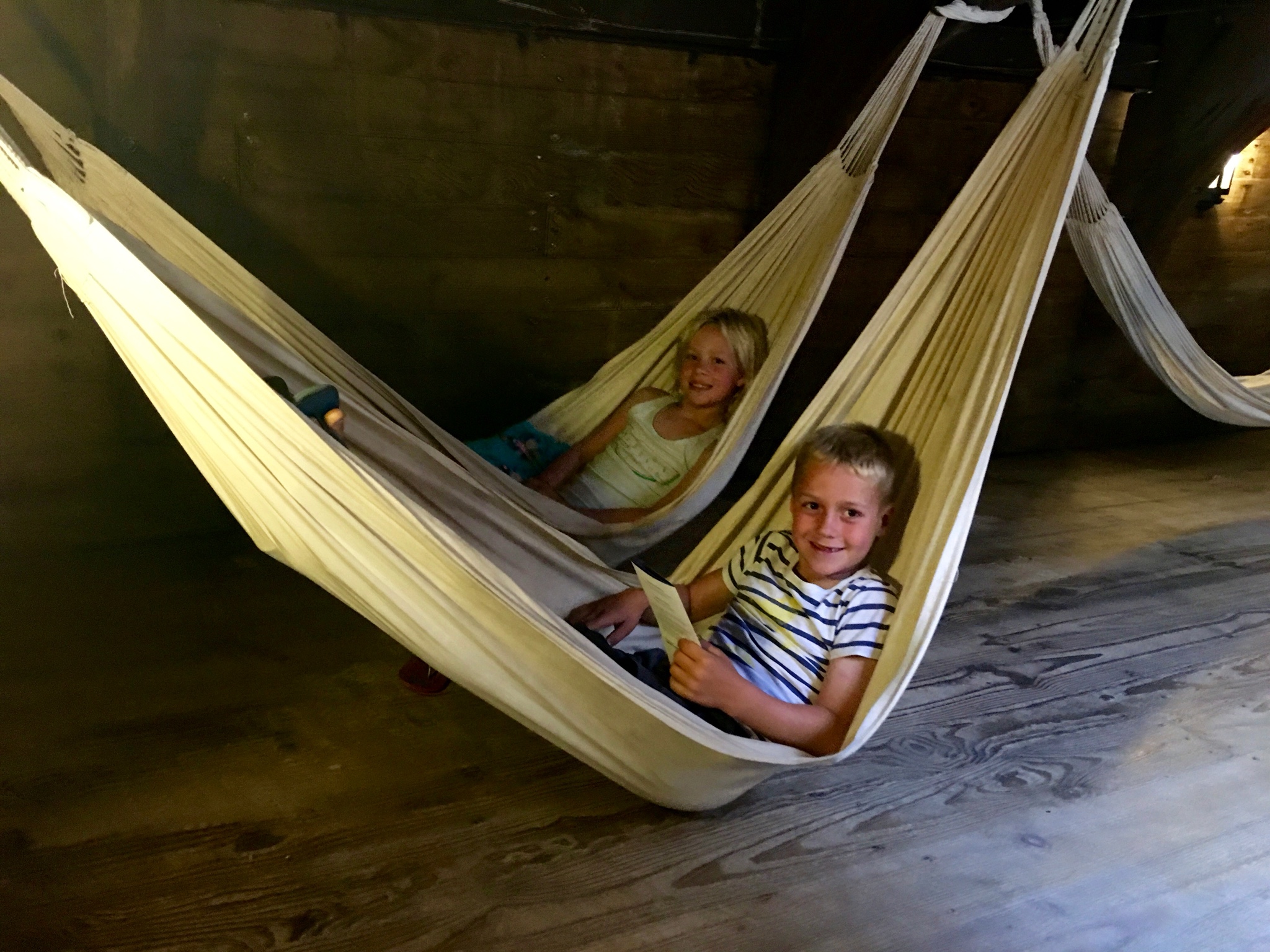
On the shore there is a replica of the Brig Amity that carried the first settlers to Albany. It was built by a local volunteer organisation over 18 months using the plans from Lloyds of London. You get to wander around the 3 decks, an gain some idea of the cramped and primitive life at sea in the 1800’s… interesting, but terrifying!
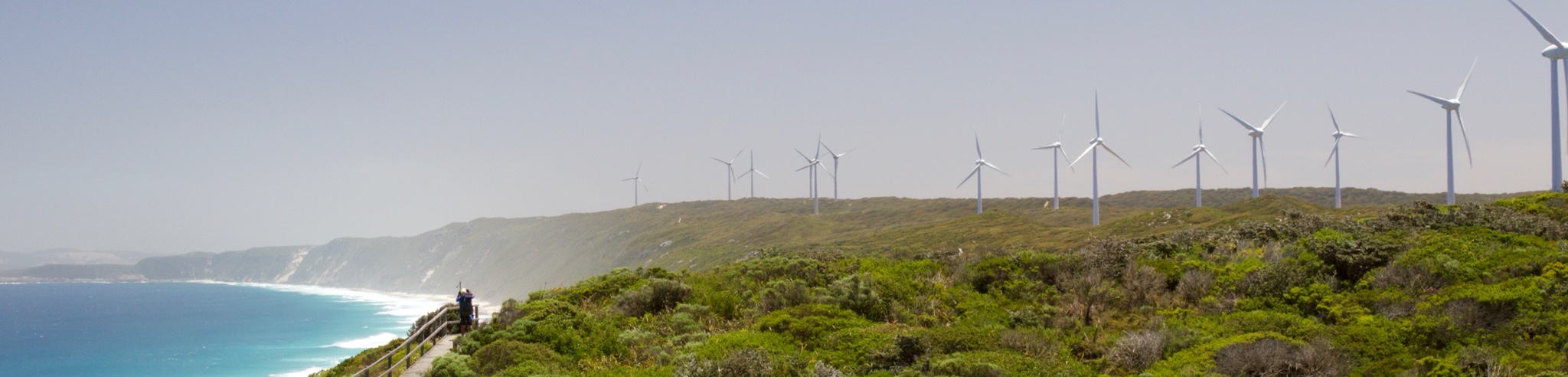
The Western Power Wind Farm supplies a massive 80% of the electricity to Albany’s population of 30,000. It has an interesting interactive walk in and around the 18 turbines with information on the massive structures. They are 100m tall, the blades are 34m long, and the turbines perched on top of them weigh 57 tonnes! Up close the noise they make is mesmerising, “whump, whump, whump” as the massive blade tips whizz by at 260 kph every 3 seconds.
Whaling is an important part of Australian history that is not often talked about. Albany’s whaling station, active from 1952 to 1978, has been converted to a museum. All the original buildings and equipment have been preserved with graphic insights into the whaling industry. It was rather confronting… the pure size and destructiveness of it all. The whaling boats took 2-20 whales per day. When the Humpbacks ran out and their hunting was banned (1982) they started hunted Sperm whales. Sperm whales were highly sought after as they had very high quality oil (at the time whale oils were used in just about everything we now use crude oil in). For each Sperm whale weighing 40 tons, approximately 7 tons of oil could be extracted. Approximately 14,600 Sperm whales were taken over the 26 year period the station was active (560 per year). These were landed to the Flensing (or cutting up) deck and everything except the teeth went into the giant pressure cookers. After cooking, the oil was extracted and stored in massive tanks. Anything remaining was dried out and crushed into whale meal, high protein powder which was added to stock feed.

New Holland Honeyeater

This Is only a Pygmy Blue Whale Skeleton!
We explored the national parks around Albany and the scenery is, as usual, stunning with incredible costal views, colourful wildflowers, massive cliffs and amazing beaches. But we did not linger too long… had I mentioned it was cold and windy! In fact for one of our Albany days we were defeated by the weather, and went to the local leisure centre, lunch out, and the the cinema. Such normality!

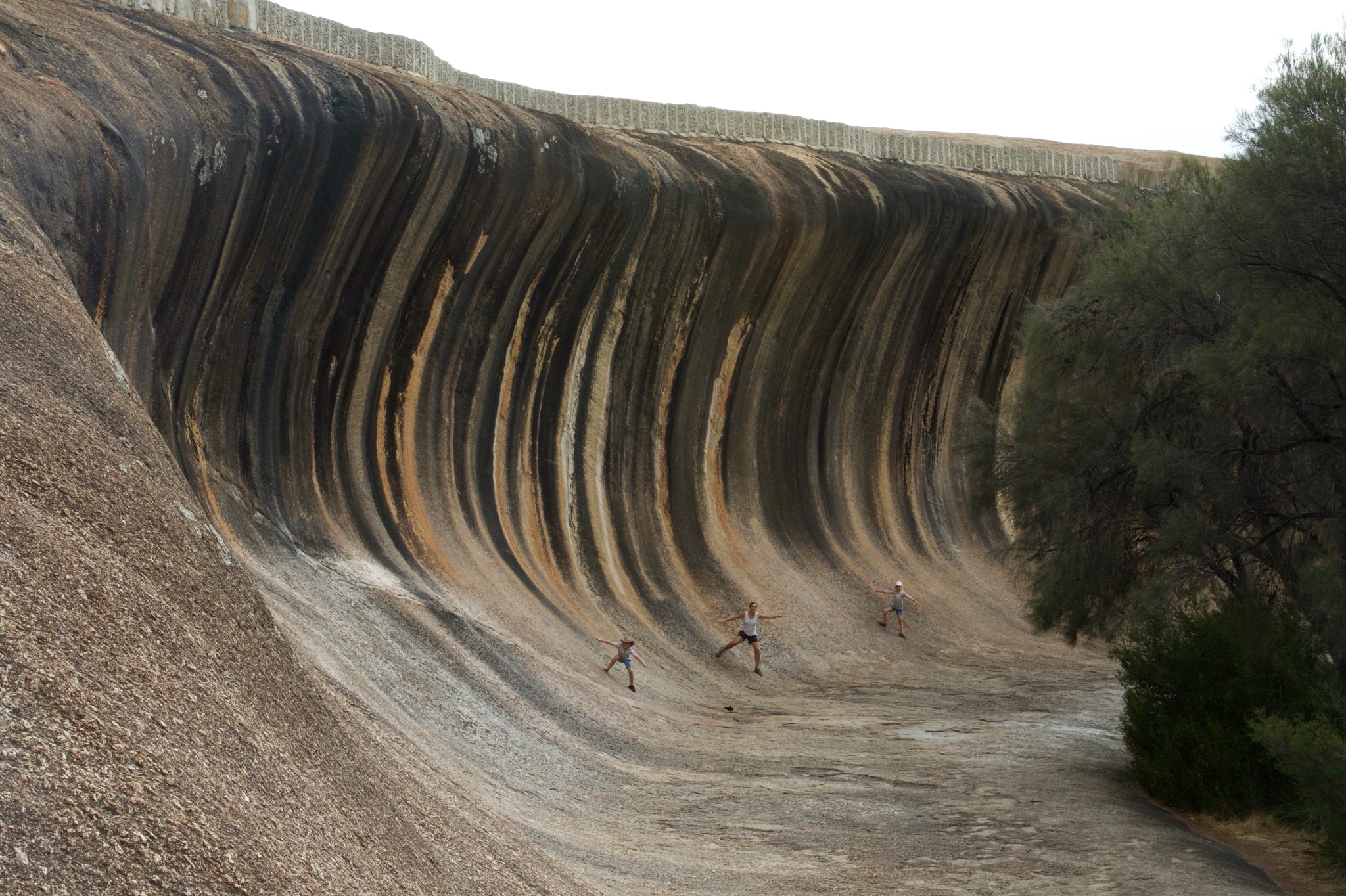
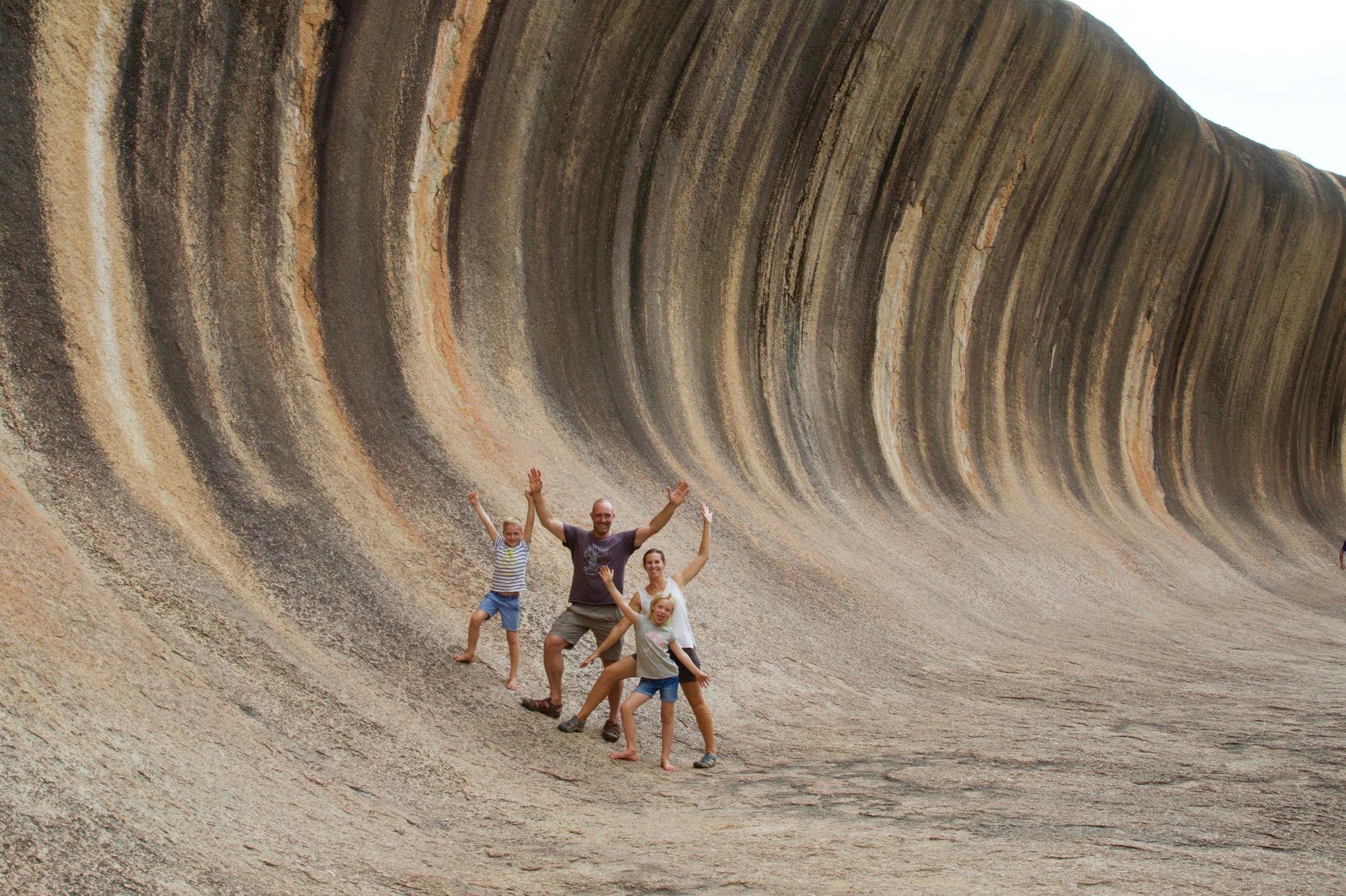
Wave rock after the rain
The weather eventually beat us and rather than continuing along the coast as planned, we made a diversion inland to escape the deteriorating forecast and visit Hyden with the incredible wave rock. It only became a major tourist attraction in 1963 after an amateur photographer, and local school principle won the Kodak International Colour Picture Competition with his photo of the rock. Now around 130,000 people visit it each year. The weather was still pretty average, but nothing as bad as the coast!
The drive up to Hyden was also really interesting as it took us through the ‘Wheat Belt’. The scenery was dramatic – gentle rolling hills with massive yellow expanses of wheat fields against the backdrop of stormy grey skies. I had not realised how significant the Australian wheat industry was. We grow 3% of the worlds wheat and export 80% of it which makes us the worlds 4th largest exporter accounting for 15% of the worlds wheat! We caught the tail end of the harvest and managed to have a poke around one of the massive combine harvesters and had fun figuring out how it works. It was good for the kids to see where food comes from.
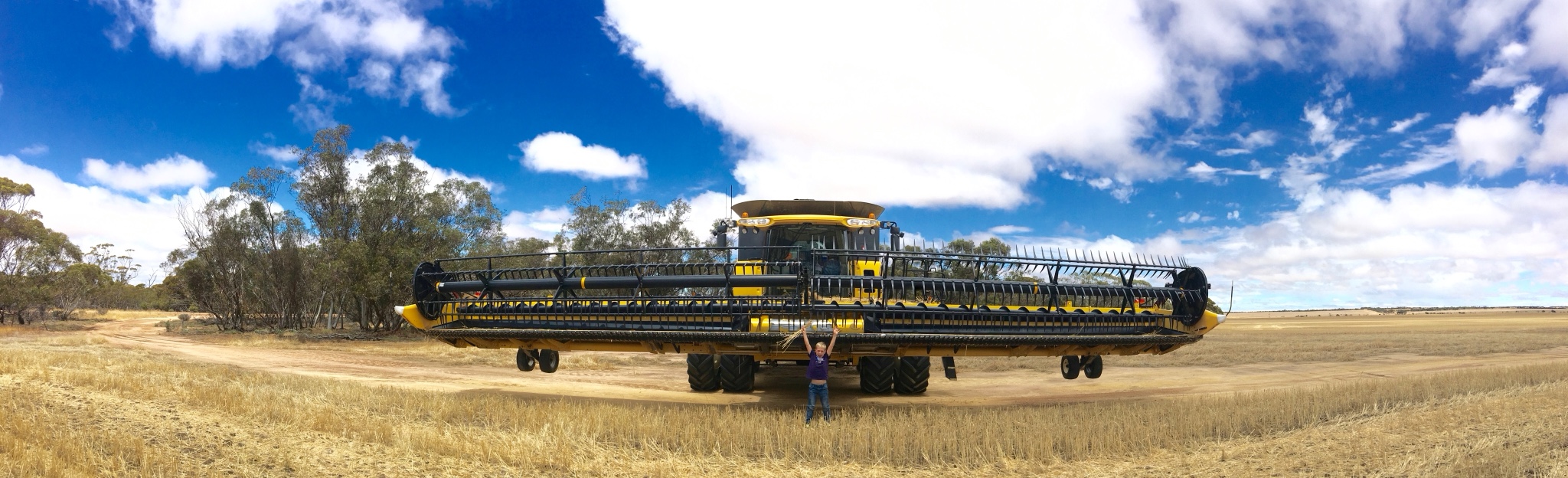
Learning about wheat
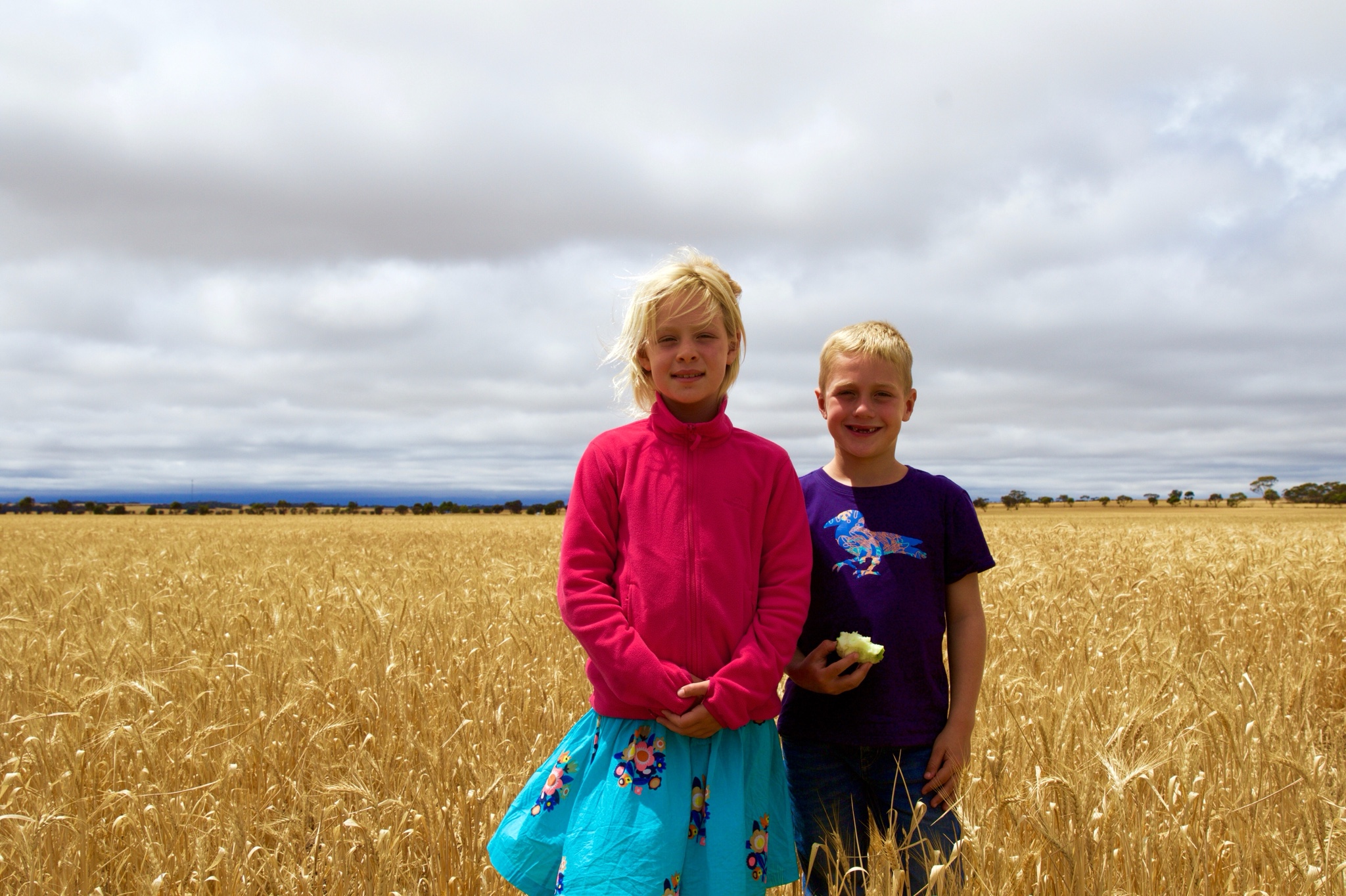
Showing enthusiasm for the lessons... NOT!

Salty lake, dark skies
The other striking part of our trip through the wheat belt was the salt lakes, a horrendous scar of excessive land clearing. It turns out the the coastal location and the prevailing winds bring sea salt onto the land at an incredible 20kg per hectare per year. Under normal circumstances, all this salt is kept at bay by the deep and extensive root systems of the native trees and shrubs that absorb the rain and prevent the level of the water table from rising into the salty surface soil. With all the land clearing and the replacement of the native vegetation by shallow rooted crops that absorb less rain water, the water table has risen into the salt laden soil and created the salty lakes. Vast areas of vegetation have died away around these salty lakes. There are a whole bunch of remedial strategies being tried to fix the problem that currently affects about 11% of WA's grain growing areas, but they reckon that it is likely to extend to a massive 30% before a new equilibrium is reached!
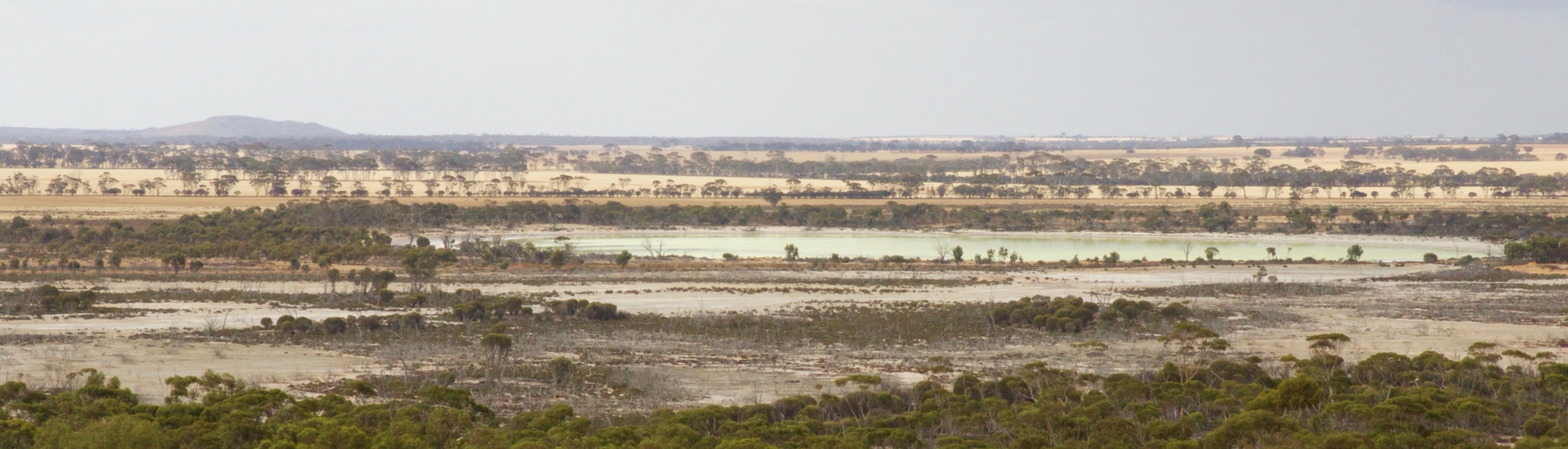
From the top of wave rock, salt lakes and golden wheat fields against the grey sky
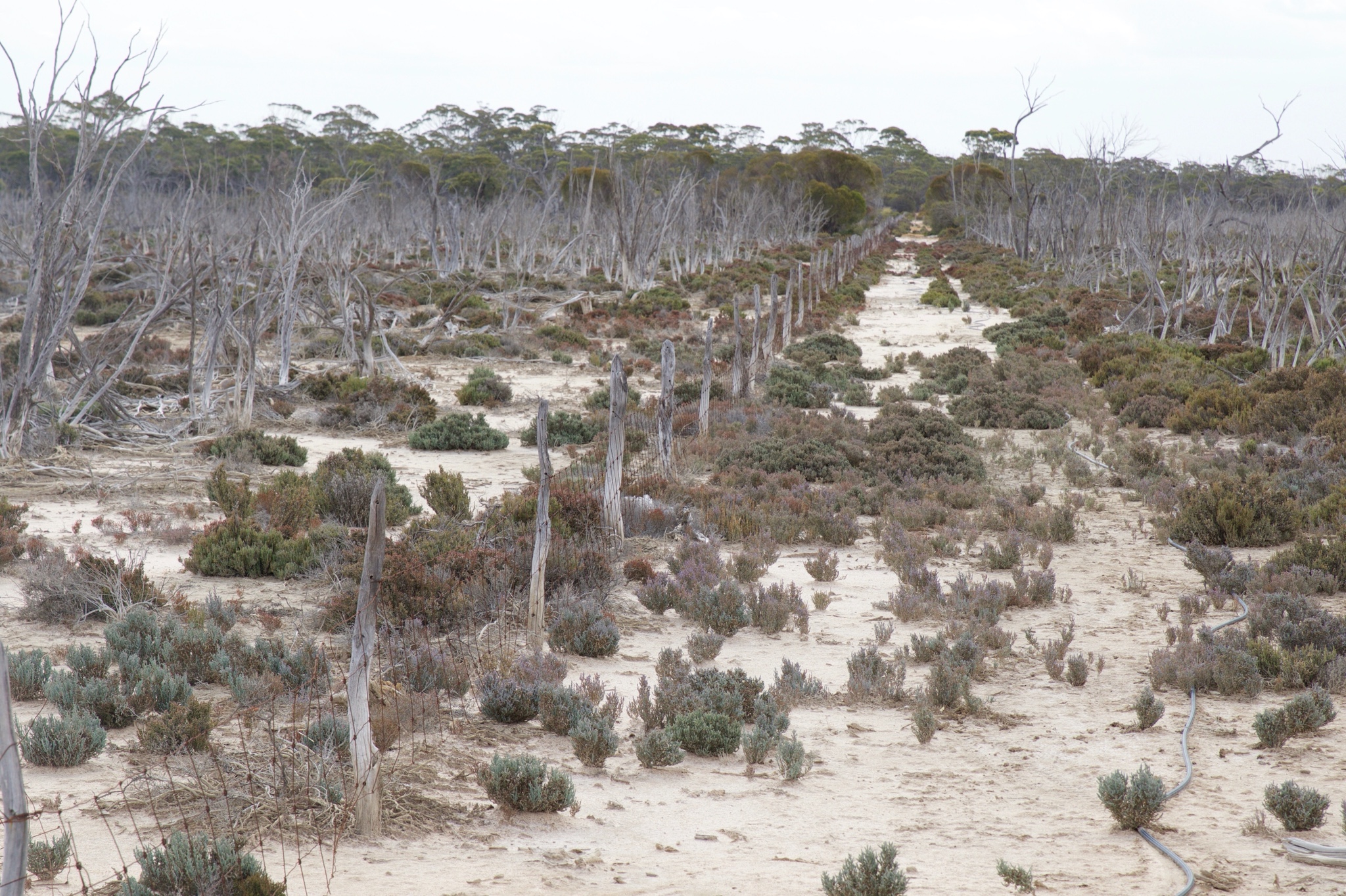
Ancient fence line through the dead salt lake
Apologies for the long post full of facts. I suspect that the lack of good weather meant more time doing and learning rather than playing and this is reflected here. Well, now back to the coast and more playing, weather permitting!
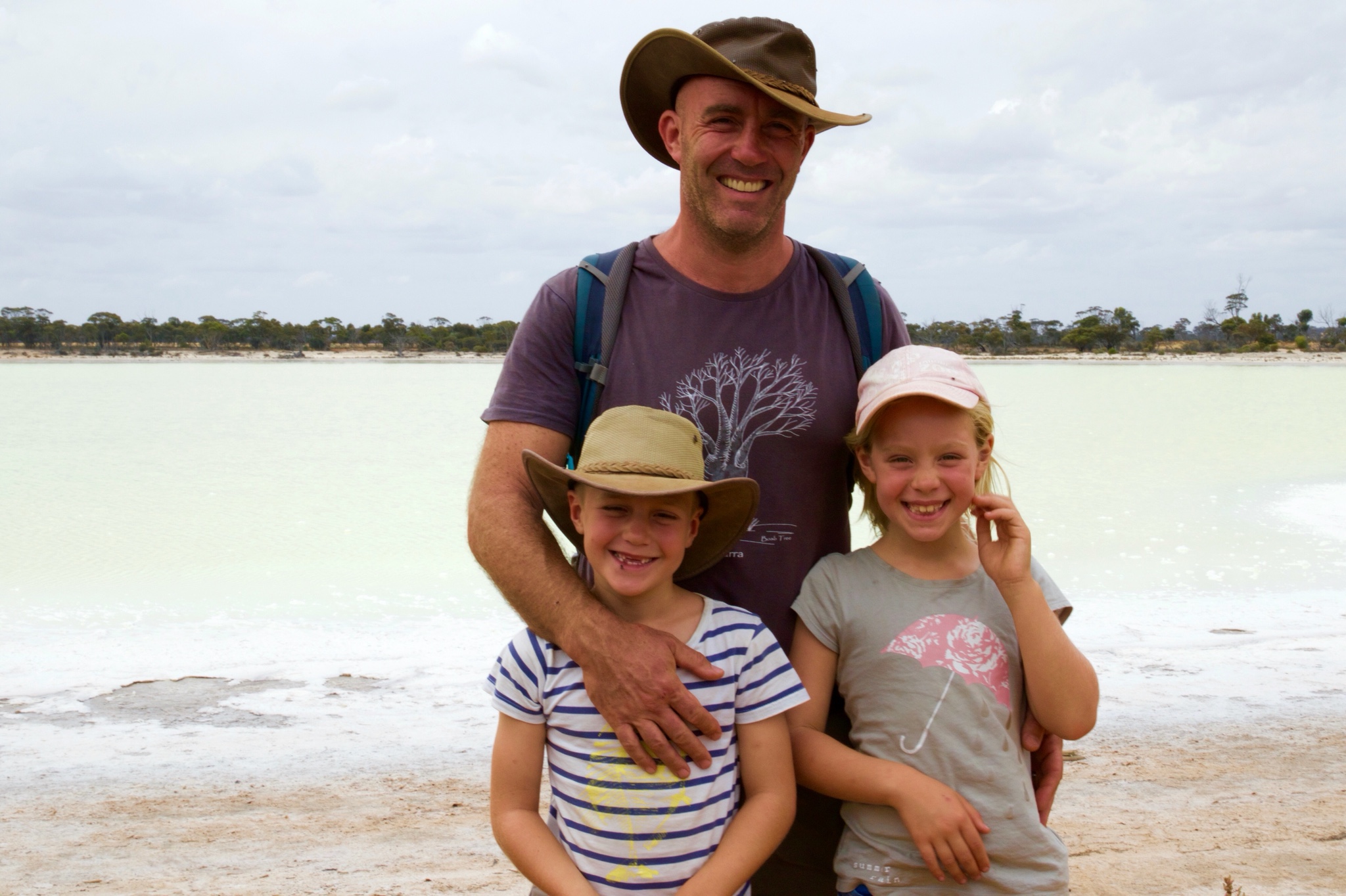
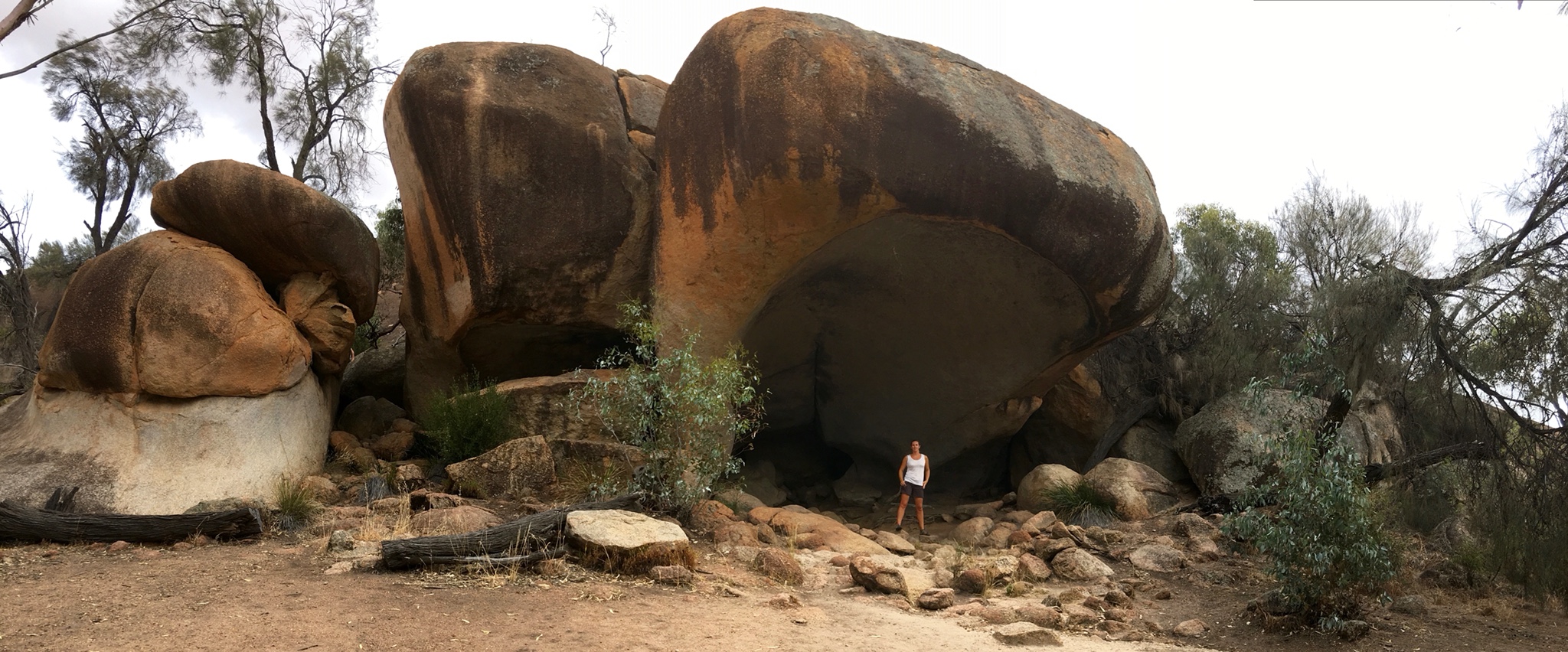
Hippo's Yawn Rock
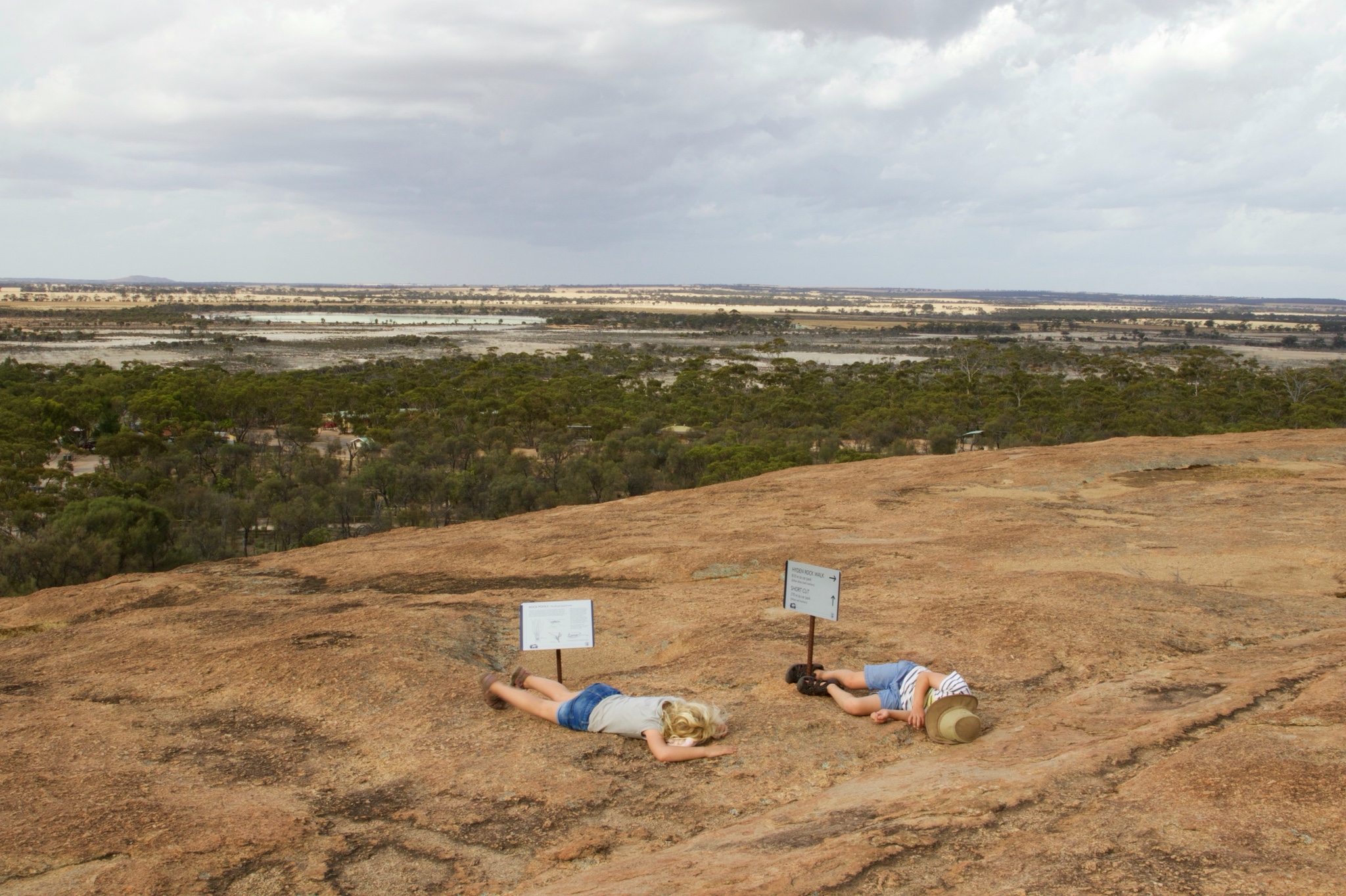
No more walking, we're dead!
 Posted with Blogsy


 Chasefloow Around Oz
Nice blog- great read- amazing photos
Enjoying the read.
Xxx
LikeLike
Agree-great read-it is not only the children learning
LikeLike